Account intelligence
Exact roles and responsibilities, live vendor evaluations, detected tech stack, and ninety days of signal history on every account — written straight back into your CRM. So your reps open with the reason instead of the introduction.
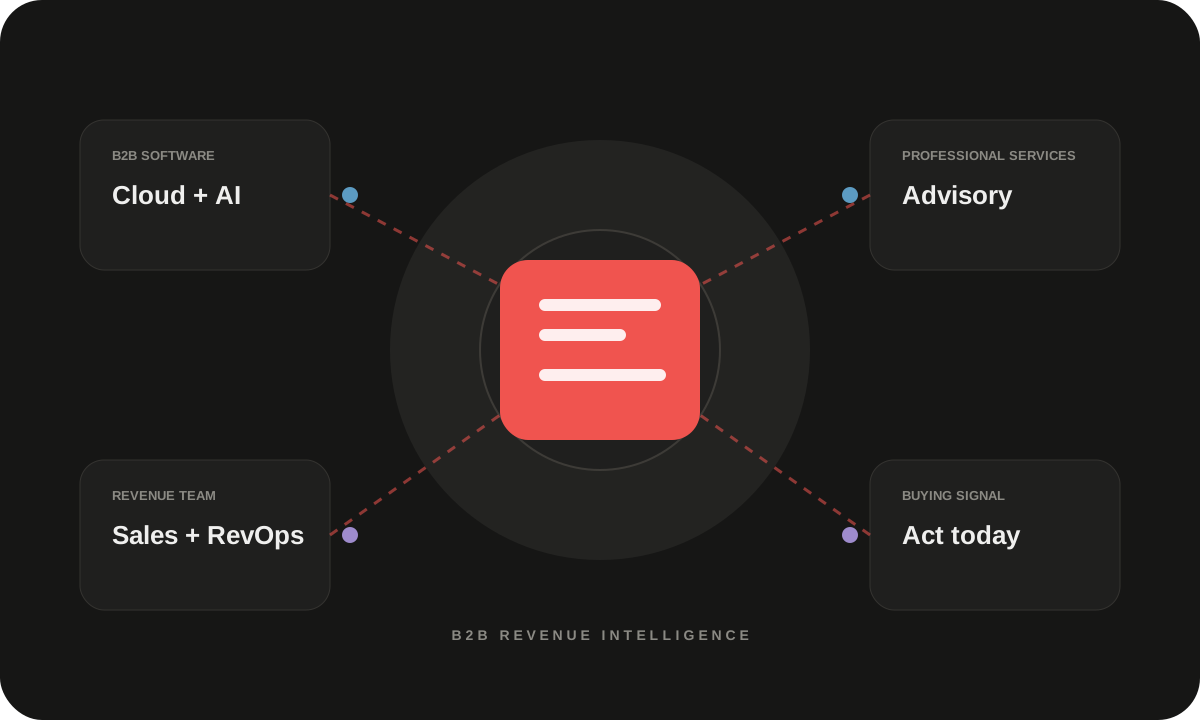
Rank
Sort the whole territory by which accounts have a reason to talk this week.
Open
Every record carries its trigger, the evidence behind it, and a line to lead with.
Close
Renewal windows and committee gaps sync straight back into your CRM.
Built for revenue teams running these motions
3.1x
more meetings booked per hundred accounts worked, after ranking by signal instead of by ICP fit alone.
Northstar Cloud · Series C SaaS
41%
less time spent on pre-call research once the trigger and opener started syncing into the CRM record.
SwiftRoute Freight · Logistics
18 days
earlier average first touch on renewal-window accounts across a nine-person commercial team.
Pinecrest Regional Bank · Financial services
The CRM layer
It connects to your CRM and fills in the reason to call.
Intelligence X sits on top of the CRM you already run. It matches every account, writes nine intelligence fields back onto the record, and keeps them current — so the rep opens a familiar screen and finds the pitch already assembled, with the evidence attached.
Everything here is true and none of it tells a rep whether to call today. The three fields that would are the three that are empty.
The rep opens the same record they always did. What changed is that it now answers why this account, why this week — before the call.
How the sync runs
Connect
OAuth into Salesforce, HubSpot, Dynamics or Pipedrive. Read-only until you approve a write scope, and you choose which objects are in play.
Match
Records resolve on domain and corporate hierarchy rather than company name, so subsidiaries and rebrands don’t fracture into duplicates.
Enrich
Nine intelligence fields land on the account and contact, each carrying the source that produced it and the date it was found.
Write back
Everything writes to a namespaced field set. Rep-entered values are never overwritten, and every change is logged for audit.
Act
Score changes fire a Slack alert, create a task, or re-rank the queue — so the pitch is ready before the rep opens the record.
Better pitch
The opener arrives with the record.
Trigger, competing vendors and the buyer’s own measured KPIs sit on the account page, so the first line references something that actually happened at the company rather than a job title.
Better closure
Timing and committee coverage stop being guesses.
Renewal windows and an explicit map of who is still unmet turn forecast conversations into a checklist. Two of four contacts covered is a gap you can work this week.
One record. Five markets.
The account changes. The intelligence layer keeps resolving.
Watch the same prospecting workflow re-resolve its buying committee, stack, trigger and opener as the account context changes — SaaS first, then manufacturing, healthcare, financial services and logistics.
Maya Chen
VP Revenue Operations · Northstar Cloud Systems
Software & IT services
Why this account now
90-day signal
93The score is not the story by itself. The direction, recency and evidence determine whether this is the account to call today.
65
Fields on every contact
13
Signal readings per 90 days
< 2 min
CRM write-back latency
The problem
Every prospecting tool answers who. Almost none answer when.
A verified email is worth very little on an account that signed a five-year contract last spring. It is worth a great deal on one that issued an RFP six days ago. Same data quality, opposite outcome — and the thing that separates them is not in a contact database.
Reach data
Name, title, email, phone
Tells you how to make contact
Firmographics
Size, revenue, industry
Tells you whether they could buy
Signal
Evaluations, triggers, renewals
Tells you whether they will, now
What’s in a record
0 fields on every contact, grouped into four questions.
Roles
What they actually own
Titles are noise. A VP Revenue Operations at a SaaS company, a CIO at a manufacturer, and a commercial-banking executive can all own different buying decisions under similar-sounding titles. Intelligence X resolves the normalized role, scope of ownership, reporting line, budget authority, and the KPIs they get measured on.
- 01Normalized role and seniority, not just the LinkedIn string
- 02Scope of ownership — entities, systems, and process
- 03Buying role: economic buyer, champion, evaluator, blocker
- 04Measured on — the metrics that make them say yes
Evaluations
Who is in market right now
The difference between a good quarter and a bad one is timing. We track buying stage, category under evaluation, competing vendors already in the room, expected timeline, and the trigger events that opened the window in the first place.
- 01Buying stage from unaware through to decision
- 02Competing vendors detected in the evaluation
- 03Trigger events: new hires, acquisitions, funding, RFPs
- 04Estimated timeline and the contract date behind it
Tech stack
What they run, and when it renews
Every tool is a wedge or a wall. We detect the ERP, AP automation, payroll, POS, CRM, and BI layer with a confidence score and the method we used to find it — so you know whether it's a firm signal or an inference.
- 01Category-by-category detection with confidence scores
- 02Detection method shown: job post, MX record, case study
- 03Gaps flagged — missing AP automation is a buying signal
- 04Renewal windows, so you can time the contract play
Engagement
Where you already stand
Your CRM knows the history. Your prospecting tool doesn't. Intelligence X pulls both into one row, so a rep never opens a sequence on an account a teammate met with last week.
- 01CRM stage and last touch, inline with the intel
- 02Opens, replies, meetings held, sequence position
- 03Objections already logged against the account
- 04Compliance flags and lawful basis on every record
The pipeline
Six stages between a domain and a reason to call.
Nothing here is a black box. Each stage names what it consumed and what it produced, and every value that survives to the record carries the artefact behind it — so a rep knows whether they are about to reference something the company said about itself, or something a model assumed.
Salesforce · Outreach · Gong
Domain + company name
Hierarchy, subsidiaries, rebrands
Job posts · DNS · case studies
13 weighted readings, decayed
Roles, authority, coverage gaps
9 fields, each with its source
What gets watched
Five signal families, and the markers inside each.
Breadth on its own is a vanity metric. What matters is that each marker is individually attributable, so a score can always be taken apart into the events that produced it.
400+
Markers across five signal families
Hiring signals
- Role creation
- Team expansion
- Backfill vs growth
- Seniority shift
- Location moves
- Contractor ratio
Technology signals
- DNS + MX records
- Job-post tooling
- Case-study mentions
- Integration listings
- Careers-page stack
- Security disclosures
Commercial signals
- RFP publication
- Procurement notices
- Funding rounds
- M&A activity
- Contract filings
- Renewal windows
Leadership signals
- Executive arrivals
- Reporting-line change
- Org restructures
- Board appointments
- Departure clusters
- Mandate statements
First-party signals
- CRM stage + history
- Call-recording themes
- Logged objections
- Sequence position
- Meeting outcomes
- Territory ownership
Across the deal
The same nine fields, doing different work at each stage.
Decide where the quarter gets spent.
Rank the whole book by signal rather than by ICP fit, so patch planning starts from who has a reason to talk instead of who looks like a customer.
Fields in play
- Signal score
- 90-day direction
- Renewal density
- Coverage gaps
Built across industries
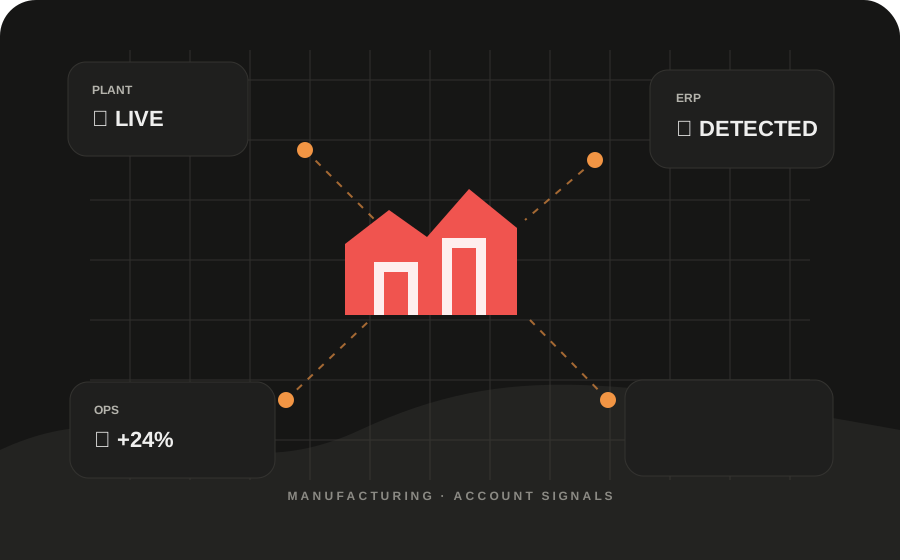
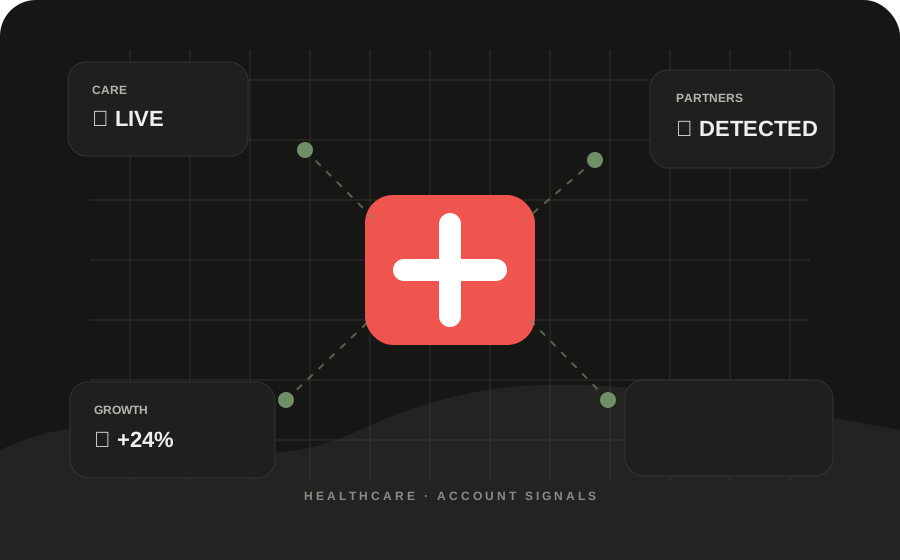
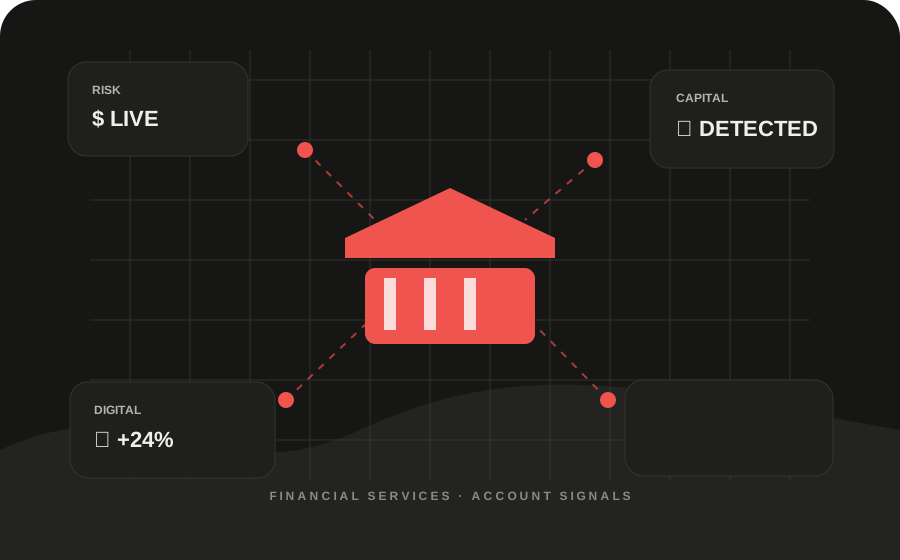
One intelligence system. Thirteen revenue environments.
Intelligence X changes the account context, signals, buying committee and recommended opener for the market you sell into — from SaaS and cybersecurity to manufacturing, healthcare, finance and telecom.




The signal engine
One number hides the trend. Thirteen readings reveal it.
Intelligence X records a composite intent reading for every account, every week. The strip on each row is the last ninety days of those readings. An account climbing from thirty to ninety and one sliding from sixty to thirty can post the same score on the day you look at it — and they are not the same account.
Weekly cadence
Thirteen readings across ninety days, appended every week rather than overwritten.
Weighted inputs
Job posts, RFPs, trigger events, and category browsing each carry a different weight, shown on the record.
Decay by design
Signals lose weight as they age, so a burst in March stops masquerading as intent in August.
How a record is assembled
Every field shows its source and the day it was found.
Enrichment tools tend to present inference and detection as the same thing. Ours doesn’t. A tool found in a job posting and one guessed from a peer group look different in the interface, and anything older than ninety days is flagged rather than served to you as current.
Customers
Revenue teams run their week on it.
“We stopped arguing about which accounts to work. The queue is sorted by who has a reason to talk this week, and the reason is on the record.”
Maya Chen
VP Revenue Operations, Northstar Cloud
“The write-back was the part that changed behaviour. Reps never had to learn a second tool — the intelligence just showed up in Salesforce.”
Robert Kim
EVP Commercial Banking, Pinecrest Regional
“Seeing the ninety-day shape rather than one score is what stopped us wasting sequence slots on accounts that peaked in March.”
Sofia Alvarez
VP Network Operations, SwiftRoute Freight
Questions
Common questions
Contact databases answer who someone is and how to reach them. That is table stakes and we do it too. The difference is the layer on top: what the person actually owns, whether they are evaluating a category right now, which vendors are already in the room, what software they run, and when that contract renews. Reach data tells you who to call. This tells you when, and what to open with.